
The Two-World View
March 10, 2026

This is a sequel to my recent article, What is Real?
The Enlightenment philosophers Berkeley and Kant proposed that the world as it is in itself is different from how it appears to our senses. Today physicists have come to agree with this assessment. How things are in themselves is nothing like how they appear to our sense organs.
But this does not bring us much closer to saying what we mean when we call something ‘real.’ For there is a difference between ‘different from how things appear,’ and what our intuitions mean by ‘actually real.’
In my last essay on this subject, ‘What is Real?’, it was a bit misleading to begin with a video clip from the movie The Matrix. Because in the now-iconic film there is a clear difference between what we would call the ‘actual world’ (largely decimated by an undefined cataclysm in the distant past) and the supposedly current imposter world created by The Architect to keep people trapped in a prison of illusion.
For those who don’t know, in The Matrix ‘the Architect’ is a specialized sentient computer program and primary creator of the Matrix. He serves as the superintendent of the system. He describes himself as the “father” of the simulation, tasked with creating a controlled environment to keep the human population docile.
Here what we would mean by calling one world ‘real’ and another ‘not real’ would be obvious.
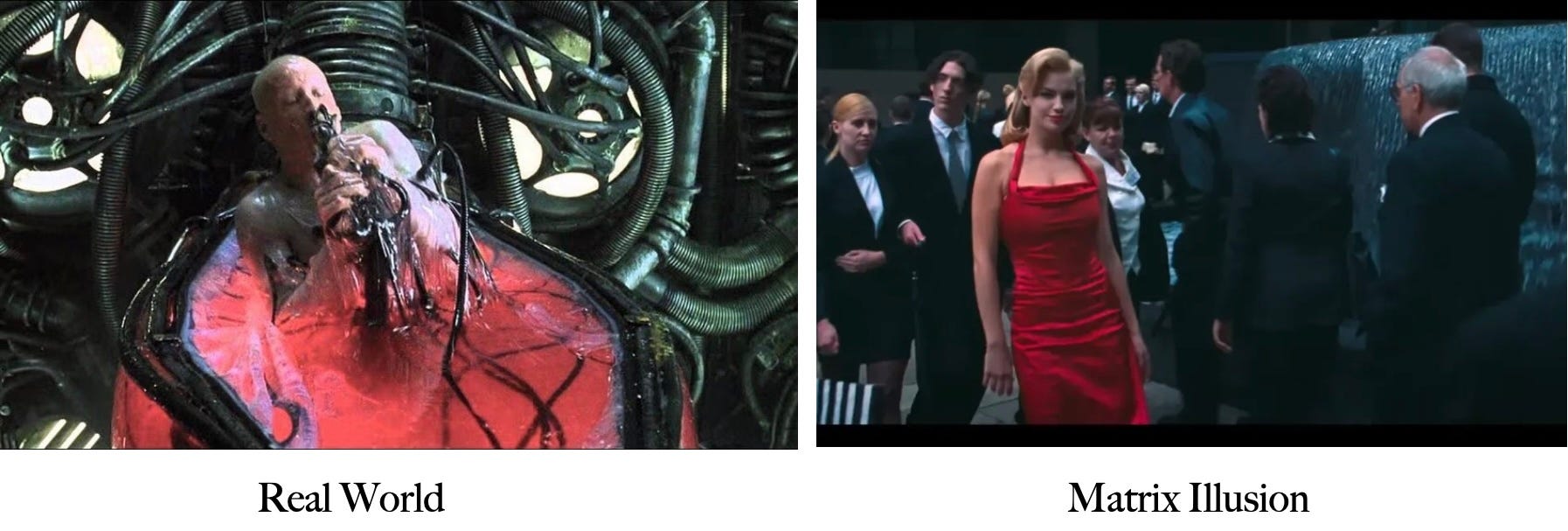
One is the original archetype used as a model to create the simulation. In other words, one is original and the other is a copy, a forgery.
Yet, if you know anything about neurology, in either case Neo is only experiencing sensations produced by his brain to represent a world that he cannot directly experience. So he cannot compare his experience to it.
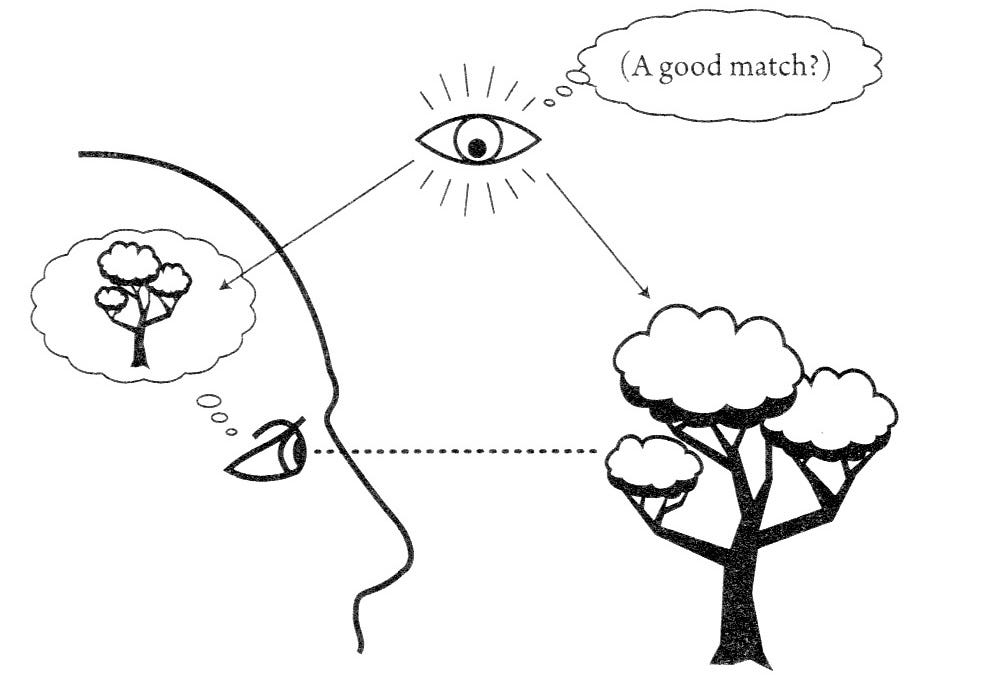
And while the signals that reach Neo’s brain in both cases are electrical and mathematical, they are both ‘in the same world.’
To make this point clearer consider an analogy.
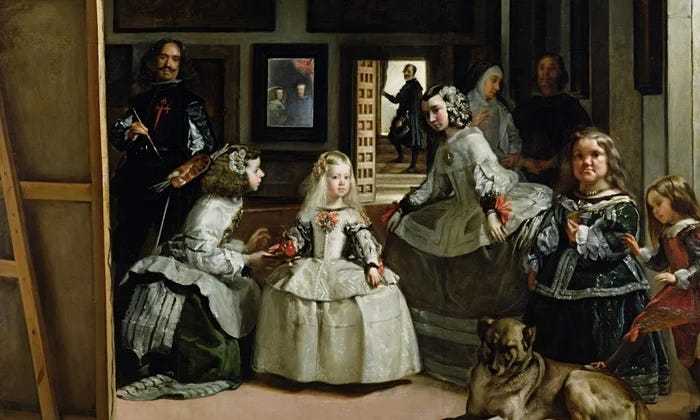
The above painting by Velazquez represents a room the artist is in. You can see Velazquez peaking out from behind the easel on the left. The room is the archetype, the original. The painting is a copy. Yet, the painting and the room continue to be ‘in the same world.’ They are both in the world Velazquez lives in.
When it comes to what most people mean by ‘real,’ it is difficult to pinpoint precisely what they mean. In the case of The Matrix or the Velazquez painting, one is the original and the other is a copy. Yet our own sense experience that we call real is itself only a representation of what we cannot directly see with those senses. Is it real? Then say what it is and what makes it real.
At this point, the reader should begin to see why the notion of ‘reality,’ which is something people generally feel assured about in their daily lives, and equate with what they see with their eyes and feel with their hands, is a bit more complicated than it first appears. The deeper we look, the harder the question becomes.
This is why in my concept of The Evolution of Perception we do away with this concept of two-worlds, i.e. one we see and a second we can’t that we suppose our senses merely represent. In The Evolution of Perception, there in only one single world and it is the world that we experience. There is not ‘another one.’ There is not an original archetype as in the movie The Matrix.
If you think about it, the main character in The Matrix, Neo, never really leaves his own mental world, i.e. his experience of the signals he receives in his brain. He is always, from the beginning of the movie to the end, in the one physical world. He never leaves it.
True transcendence is something else entirely, and something I’ll take up in a future post.