
Introducing my writings
March 8, 2026

I’m new to Substack. To get my Substack space looking clear and inviting I began by uploading ten articles from my web page https://sites.google.com/view/chris-ott-hub. This is just to give people some material so they’ll know the kinds of things I write about. However, this is my first article written specifically for Substack. I titled it ‘Introducing my writings’ because I felt there were a few things I should clarify about myself.
First is the central subject I constantly refer to as the evolution of perception idea, or sometimes simply EOP. I’ve summarized the idea many times in other papers. But I feel I can do so even more clearly and simply. I want to show what questions EOP answers and why its answer is fundamentally different from answers we’ve heard before.
At its core EOP represents a very different way of approaching the problem of causation. What is the cause of phenomena we perceive around ourselves? This new approach is not only applied to cases of individual phenomena, but even to the macrocosm of the Universe itself.
The way questions of cause have always been approached in the past is to posit a theoretical thing as the cause. Our answers came down to answering the “What” question. In EOP, the question is changed to “How” that phenomenon came about.
This is the difference between positing a thing to explain something we perceive and positing a process.
Let me give a few examples of the first approach, the thing approach. Ancient people explained phenomena by positing the existence of spirits — often conceived as hidden people or animal creatures.
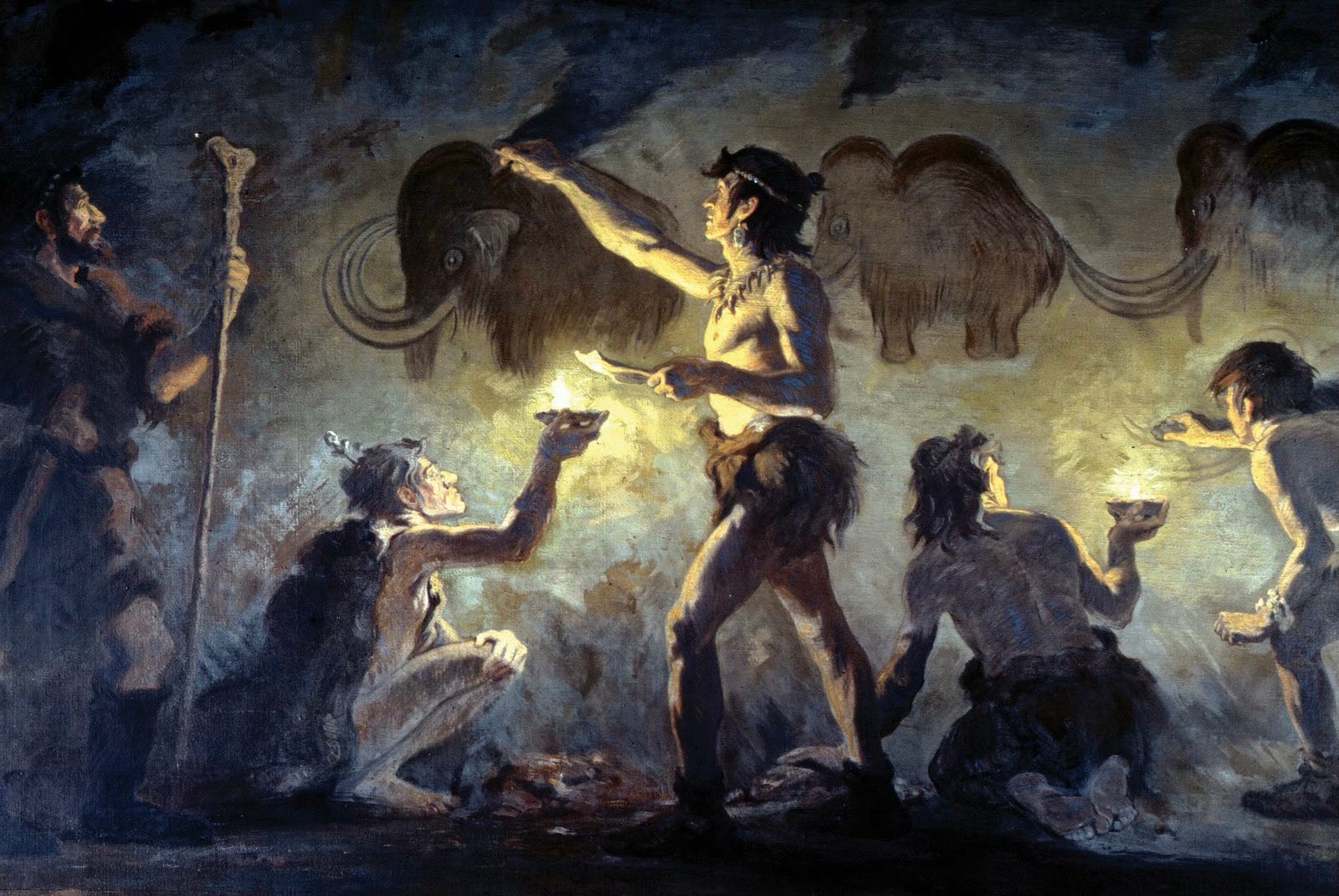
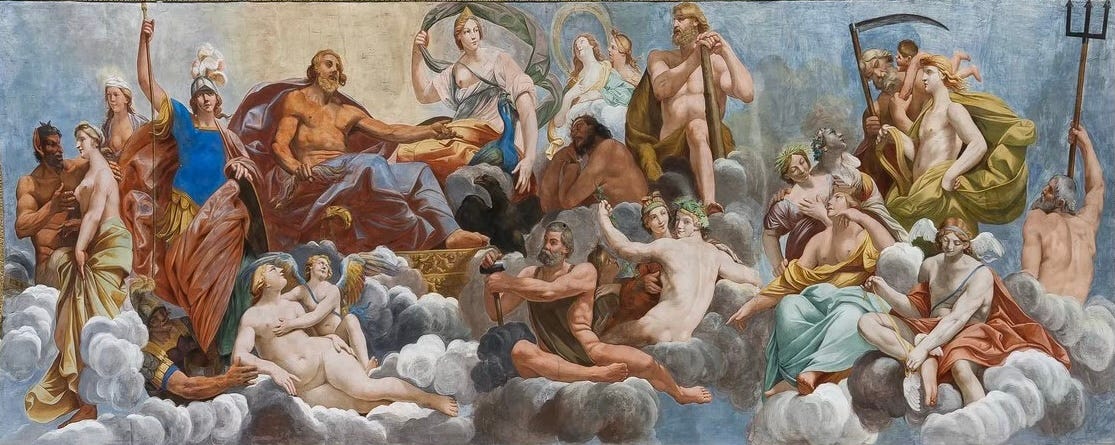
In time such spirits evolved into pantheons of gods.
As the notion of hidden gods came to be seen as primitive and a bit silly, a group of philosophers Aristotle called ‘natural philosophers’ (what we might now call scientists) revised their method of explanation by theorizing the existence of causally responsible hidden substances. Anaximander postulated the presence of an imperceptible substance he called apeiron to explain virtually everything. Leucippus posited imperceptible atoms.
Much later, in the 20th century, material scientists were still doing the same thing. Multiverses, portals, bent space, dark matter, strange energy, and superstrings are just a few examples of occult entities in our modern times. I use the word ‘occult’ in its philosophical sense as hidden from our senses.
EOP proposes that these answers are all part of a single pattern of approaching causation by asking what caused a thing to occur rather than how it came to occur. In my book Evolution of Perception Re-Explained I give examples from recent science where scientists are seeking for explanatory processes. While there are many examples one could give, I emphasize developments in plate tectonics in the 1970s.
Using this same principle of process, we seek for ongoing processes we can observe in our perceptual dynamics. Using developments in gestalt psychology we can isolate what I call perceptual schemas. We can easily discover such schemas in our own acts of perceiving. A huge part of my writing is dedicated to clarifying what I mean by such schemas and pointing out their constant operation.
By positing such a causally responsible process of evolving perceptual schemas to explain many things we perceive, many previously considered obligatory theoretical entities are found to be unnecessary. The new system of an evolution of perception obviates the need for countless things no one could prove exist — because they don’t.
Meher Baba
Another thing I wish to clarify is the constant reference after my first book to Meher Baba. I have explained this connection many times but I want to explain it again. If I read a paper on cosmology in which the author referred to an Eastern master I didn’t know much about, I would be turned off. I would assume this author had a secondary motive of converting people to some weird cult.
In my case, nothing could be further from the truth. I am not a member of any organization related to Meher Baba. I do not have a card. I do not make donations. I live around many Baba followers and I grew up around them and like some of them. But my views on EOP are not from his writing. However, over the years I grew more and more cognizant of the fact that knowing about his books had a big influence on me in developing EOP, and I’ve felt morally obligated to acknowledge that fact and give credit where it’s due.
I couldn’t care less what religion anyone else is, and even respect and admire people of all kinds of faiths, and have also admired many atheists. One of my favorite atheists was Bertrand Russell.
But, I also mention Meher Baba because there is no other source for many of the things I speculate about. Whether one considers Meher Baba a fraud or a mad man, it makes no difference to me. But there are many aspects to his teaching that flesh out EOP and give it a larger dimension, especially his teachings on sanskaras and his Ten Principal States of God, which approaches the subject of God in a way that no other writer ever has.
In short, if I hadn’t read the works of Meher Baba in my youth I never would have been able to conceive of the evolution of perception. And for that I’m very grateful. But the evolution of perception idea stands up by itself, on its own merits, even if you never looked up a word Meher Baba wrote. So I ask people to have an open mind, and understand why I quote Meher Baba from his many books. My connection to his writings is mostly intellectual and my spiritual aspirations do not follow any rituals or prayers his followers might practice.